Sustainable Materials for Renovation: A Practical Guide
By Sophia Laurent · Published · 5 minutes read

Sustainability in a renovation is rarely about one heroic material. It is a series of small, boring decisions—where the timber came from, how long the floor will last, whether the adhesive off-gasses—that add up to a room you can feel good about for twenty years rather than two.
The trap is treating 'green' as a shopping list of trendy products. In practice the most sustainable choice is usually the one that lasts, can be repaired, and was made reasonably close to your front door. This guide covers what to compare, what things cost, and where the trade-offs genuinely sit.
Start With What You Keep, Not What You Buy
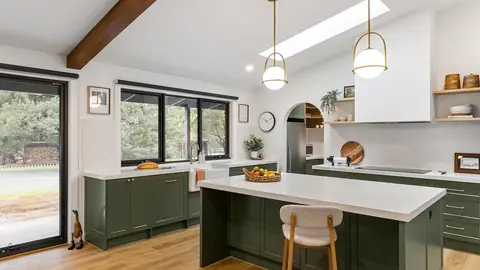
The greenest square metre of a renovation is the one you don't touch. Before pricing bamboo flooring, get a joiner to assess existing floorboards, doors and joinery—refinishing and re-sealing typically costs a fraction of replacement and keeps carbon already spent in the building. The same logic applies to kitchen carcasses: new doors and worktops on sound boxes often save 30–50% against a full rip-out, and the disruption is shorter.
Decide early what is genuinely failing and what is merely dated. A structural surveyor or experienced builder can tell you whether 1970s windows are single-glazed and draughty or simply ugly. Keeping salvageable elements also gives you more budget to spend well on the parts that must be new, which is where material quality actually matters.
- Refinish rather than replace sound timber floors and doors
- Retain kitchen carcasses and replace fronts and worktops
- Repair original cornices, architraves and skirtings where possible
- Ask a builder to separate 'failing' from 'dated' before demolition day
The Materials That Earn Their Keep
Timber is the workhorse of low-impact interiors, provided it is certified and appropriate to the room. Look for FSC or PEFC certification on anything structural or visible, and prefer species suited to your climate rather than exotic imports. Oak, ash, Douglas fir and reclaimed pine all wear well; reclaimed timber carries the lowest embodied carbon but needs grading for structural use.
For soft furnishings and insulation, natural fibres—wool, cotton, linen, hemp, cork and wood fibre—generally have lower embodied energy than petrochemical equivalents and handle moisture better. Wool carpet and cork flooring typically run £25–£60 per square metre installed versus £15–£35 for mid-range synthetic alternatives, so budget accordingly.
Finishes matter as much as substrates. Water-based lacquers and low-VOC paints now perform close to solvent-based equivalents; expect to pay 10–20% more per litre. Ask for the safety data sheet, not just a 'natural' label, and allow proper drying time between coats.
- FSC or PEFC certified timber for anything structural or visible
- Wool, cotton, linen and hemp for upholstery and soft flooring
- Cork and wood fibre for insulation and underlay
- Water-based lacquers and low-VOC paints, checked via safety data sheets
Reading the Claims Without Getting Cynical
Labels are a starting point, not a verdict. Third-party certification—FSC for timber, GOLS or OEKO-TEX for textiles, Greenguard Gold for low-emission products—means an independent body has checked something specific. A manufacturer's own leaflet with a green leaf on it means nothing in particular. Ask which standard applies and what it actually covers.
Embodied carbon is worth understanding but hard to compare at the point of sale. As a rough hierarchy: reclaimed and locally sourced materials sit lowest; certified new timber is low; fired products like tiles and cement are higher; aluminium and virgin plastics are highest. Transport adds meaningfully—a tile shipped from the other side of the world can outweigh a slightly less 'pure' local option.
- Prefer independently certified products over self-declared eco claims
- Ask what the certification covers—sourcing, emissions, or both
- Weigh transport distance against material type
- Treat 'natural' and 'eco' as marketing words until proven otherwise
Cost and Availability: What to Expect
Sustainable materials carry a premium, but it is usually smaller than assumed and often offset by durability. Expect roughly 10–25% more for certified timber, 15–30% more for natural fibre flooring, and 5–15% more for low-VOC finishes. Where the premium is steep—reclaimed or specialist products—it pays to concentrate it in high-impact areas such as the main living space.
Availability is the practical constraint. Many certified and natural products are stocked to order with four to eight week lead times, longer for reclaimed batches. Order samples early, confirm batch consistency for anything visible, and do not leave finishes to the week before installation. If you are managing a contractor's schedule, this is where a considered plan matters—see our guide to choosing an interior designer for how to set expectations up front.
Where Sustainability and Design Actually Meet
A sustainable material palette still has to look good, or it will be ripped out in five years and the exercise is pointless. The trick is to limit yourself to a small number of honest materials with visible texture and let them carry the room. Three or four materials used consistently—oak, lime plaster, wool, linen—read as calm and deliberate rather than worthy.
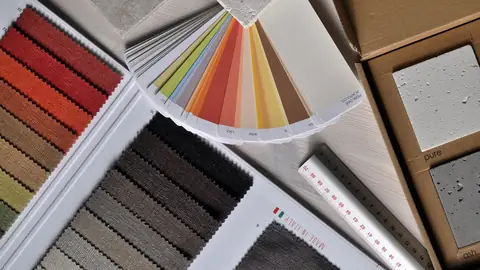
Texture does the heavy lifting when colour palettes are muted. Layer rough lime plaster against smooth timber, or bouclé against flat-weave linen, to keep a natural scheme from feeling flat. Our piece on mixing patterns and textures covers how to build that depth without clutter.
Lighting is part of the material story too: natural finishes shift tone through the day, so specify warm, dimmable sources rather than cool downlights. A layered plan makes the investment visible—see how to create a lighting plan for any room.
Durability Is the Real Green Metric
A material that lasts thirty years beats a 'greener' one that fails in eight, every time. Ask for wear ratings on flooring (AC4 or above for busy domestic areas), Martindale rub counts on upholstery (20,000+ for family sofas), and warranty terms that reflect real use rather than marketing. Solid timber floors can be sanded and refinished several times; engineered boards usually once or twice; laminate rarely at all.
Design for repairability. Choose removable rather than glued-down finishes where possible, keep spare tiles and boards, and specify standard sizes over bespoke so replacements remain available. Kitchens and bathrooms are the most resource-hungry rooms per square metre—if you are working to a tight budget there, our guide to small bathroom remodels shows where savings and quality can coexist.
| Material | Typical cost | Expected lifespan | Relative embodied carbon | Notes |
|---|---|---|---|---|
| Reclaimed solid timber floor | £45–£90/m² | 40+ years | Very low | Batch variation; needs grading |
| New certified oak flooring | £50–£100/m² | 30–40 years | Low | FSC/PEFC; sandable 3–5 times |
| Engineered oak flooring | £35–£70/m² | 15–25 years | Low–medium | Sandable 1–2 times |
| Wool carpet | £25–£60/m² | 10–15 years | Low | Natural, repairable, higher upfront |
| Cork flooring | £30–£55/m² | 15–25 years | Low | Warm underfoot; seal every few years |
| Porcelain tile | £30–£70/m² | 30+ years | Medium–high | Durable but energy-intensive to fire |
| Luxury vinyl tile | £20–£45/m² | 10–15 years | High | Petrochemical; rarely repairable |
Budgeting the Premium Sensibly
Spread the premium where it performs. Spend on the floor, the insulation and the things you touch daily; save on decorative items and anything likely to be changed within five years. A useful rule of thumb is to allocate 60–70% of the materials budget to elements with a lifespan over fifteen years.
Get comparable quotes on a like-for-like basis, including installation and wastage, before committing. Fees and procurement models vary widely—our comparison of hourly versus flat-rate design fees explains what is typically included. And when you present the scheme to family or clients, lead with durability and cost-per-year rather than ethics alone; it converts sceptics faster. Our guide to presenting an interior design concept covers that conversation.
- Keep and refinish sound existing elements before specifying anything new.
- Concentrate the sustainability premium on floors, insulation and anything with a 15+ year lifespan.
- Trust third-party certification over manufacturer eco claims.
- Check lead times and batch consistency early—most natural products are made or stocked to order.
Sophia brings a background in sustainable design and color theory to her writing. She is passionate about helping people create beautiful, eco-friendly spaces on any budget. Her articles often explore material choices and innovative solutions for small spaces.